The Sermon I should have preached

This post is long overdue.  

On October 2, at 4:00 p.m. all over Jamaica  we gathered in civic duty to pay our respects for our departed Head of State Queen Elizabeth II and to pray for our new King. 

We affirmed the status quo, of our poor political and social systems instead of using these services to encourage a better Jamaica.  

Many stand on the side of ‘good’ schooling, money, and social standing.  We berate the monarchy for not helping us, for not apologizing for slavery, for not doing enough in 1962. We clamour for reparation and say more should be done.  Yet what have we done as Christians?  What are we doing as political leaders and ordinary citizens for a better society and a better quality of life all round? What are we doing to respond to human need, to transform injustice and to challenge violence? 

We are no different from ‘Queeny’, as we pay lip service to those in need.  But we are not bound by the same oaths and laws as the monarchy who do nothing except on the recommendation of her Prime Minister. Yet we choose to for the most part have our verandah speeches and we are all sympathetic, but there is no action. We prefer to watch the crime rate spiral out of control and employ security guards to protect us. We want no national programme that may (operative word) inconvenience us in the short term, but which will help solve our problems in the long term. 

As church we have the network and ability to be different, but we lack the will. Church was born out of being different. In my own denomination, for members of the Anglican Communion, Thomas Cranmer- Prayer Book writer, and others died because they dared to be different.  Bogle, Sharpe, Nanny and the Maroons (who I believe the British samfied), Gordon, Bedward, and Garvey, dared to be different and affected people’s lives positively. The self-serving platitudes of the Church and those with political influence do little to stand up for our oppressed people and/or living without dignity.  

Our people remain landless, forced to live in informal settlements. 19.3% live in poverty (STATIN 2017) 

Sixty years after independence illiterate persons still graduate from high school, and we boast an 87% literacy rate instead of 90 and over like some of our Caribbean relatives. Our educational system is segregationist: all schools do not have access to the same resources they require to do well. Some children will never be able to attend some schools, in the same way, if you live in a certain locale you can’t have certain jobs.  We still have schools on shift; whole communities with no access to internet and children expected to use it.  Children still go to ‘grung’ (agricultural fields) on Fridays instead of school, and in many rural schools, only half of the children attend during the last week of term. 

We have a serious problem with sexual predators and incest, yet no treatment. In a highly sexed society good moral standards are not being maintained. It is just sex, and not our business when a man gets involved with a child under 17. 

The indiscipline in our society is second to nowhere else as far as I am concerned.  Our drivers do not observe the road code.  

Queen Elizabeth II has died! Long live the King.  Our nation deliberates becoming a republic. May we recognize that changing our status makes no difference if we do not change our attitude to nation building.  It is an opportune time for us to set our face to a better Jamaica as Jesus did towards Jerusalem in Luke 9:51 Our task has always been and more so now to work at fixing our problems making sacrifices and providing our citizens with the ability to live their best lives “so that Jamaica may under God increase in beauty, fellowship and prosperity” and advance the whole human race.  

#Queeny, #Civicpride, #nationalpride,

Posted in Uncategorized | Leave a comment

A Birthday Sermon

Today is the commemoration of Jesus going to prepare a place for us, of Jesus leaving his disciples to be with God, to be in a better place to set us and our affairs of redemption and salvation right . It is also on a special milestone for me, so Paul’s prayers of Ephesians 1:15-23 is fitting for reflection.
The letter begins with praise and thanksgiving to God. It celebrates the spiritual “blessings” available to us as believers in Jesus. It reminds us that:
1 God acts through Jesus,
2 It is Jesus who reconciles us to God
3 We belong to him , and salvation is at work, so we wait as the rest of His plan unfolds through our faith and love of God and neighbour.

A part of it says “I have heard of your faith in the Lord Jesus and your love toward all the saints, and for this reason I do not cease to give thanks for you as I remember you in my prayers. I pray that the God of our Lord Jesus Christ, the Father of glory, may give you a spirit of wisdom and revelation as you come to know him, so that, with the eyes of your heart enlightened, you may know what is the hope to which he has called you, what are the riches of his glorious inheritance among the saints, and what is the immeasurable greatness of his power for us who believe.”

The prayer reminds the Ephesians and us that our identity is in Jesus and all have been called into a life of faith. The wisdom and revelation deepens as we come to know Jesus, and understand God and how we should relate to him. This relationship comes from being constantly reconciled to Jesus and therefore to one another. Our hearts may then see the hope of what what we believe is God’s plan for us. And God has a plan for each of us. I for one am able to see it from time to time. Not necessarily as in what is going to happen, but definitely in how God has orchestrated the different things I have done which not only makes me a better person, about allows me impact others. I can see how God has provided persons in my life that I can call on for information and help as I need it. I see that God has given me connections and lifelong friends that can provide support. I see how God has prepared me and is still preparing me for every step of this earthly journey.

I invite you to reflect also so you too can see the revelation of the goodness that God has provided for you – the wisdom God gives, and the enlightenment one feels.

As in all of Paul’s letter he remembers his various congregations in prayer and in thankfulness for their continued faith and love. Paul undergirds them with his prayer and we too must constantly undergird each other in prayer. Paul hears about their faith, which means it is seen by others. It is active. It is not kept to themselves. He also hears of their love for others which again would be seen and active. The implication here is that transformation is taking place. And so Paul prays for continued wisdom from God to walk in the way they have started; That they will continue to allow God to work through them for the good of their community, so that the community will know God’s wisdom, riches, hope, and power; that this will be seen in and through their relationship with others; as they express God’s justice loving-kindness mercy compassion and walk humbly before God praying this same prayer for others.
Today on my birthday, and the Feast of Ascension, I in particular and we in general are reminded that our task is to walk in their footsteps. We too must hear the faith and love of others, we must show our faith and love so others can hear it and come to know the same faith and love too. We must continue living in thankfulness. We must continue to seek God’s wisdom as we come to know him more and more, as we are constantly being brought back to acknowledge that Jesus Christ is Lord and he is in charge. Let us acknowledge that God guides and we just need to put our hands in his, our faith in him and allow God to lead.

I pray for myself and for all of you as Paul prayed for the Ephesians
I pray that the God of our Lord Jesus Christ, the Father of glory, may give us a spirit of wisdom and revelation as we come to know him, so that, with the eyes of our heart enlightened, we may know what is the hope to which he has called us, what are the riches of his glorious inheritance among the saints, and what is the immeasurable greatness of his power for us who believe, according to the working of his great power. May we understand that God put this power to work in Christ when he raised him from the dead and seated him at his right hand in the heavenly places, far above all rule and authority and power and dominion, and above every name that is named, not only in this age but also in the age to come. That God has put all things under Jesus making him the head of his body the church, the fullness of him who fills all in all. May we seek to understand how to live this more and more. Amen.

Posted in Musings | Tagged , , | 1 Comment

Reggae the Message of Resilience and Triumph – A theological reflection

Last Friday February 26th, 2021 we commemorated Jamaica Day under the theme ‘Celebrating Jamaica: ‘Reggae the Message of Resilience and Triumph’.  Reggae does express the resilience of the Jamaican people.  this theme provides us with an opportunity to theologically reflect on where God is in our culture. While many will say God is counter-cultural, today, I would like to delve more into the theology of our indigenous music being an authentic expression of the divine spirit within us.  

The first Genesis creation story tells us that God made everything. It lists all life forms as being made by God. chapter 1 vs 29 says: ‘God saw every thing that he had made, and, behold, it was very good.  The second creation story in Genesis chapter 2 tells us that God blew God’s breath into us. We should therefore understand that God is the source of all life. As Marcus says God gave us a mind to use. It is this mind that give rise to creative expressions such as reggae.

Resilience and triumph smacks of resistance and transformation, which is the life that our Lord Jesus Christ led, while on earth.  They also speak to recognizing that all is not well, be it with us as individuals, as a community or as a nation.  We stop, take stock and take corrective action. Theologically we refer to this as repentance and redemption.

Music is a cultural art form that shows the authenticity which we are called to show as children of God. Yes, I will admit that not all music is reflective of God, but we shouldn’t throw out the baby with the bath water, but seek to understand where is God in the music.

Reggae music represents the struggles of the people as they lament and seek an understanding of what is happening to them. No different from some psalms which were the songs of the Jewish people. For example Psalm 22:2 I cry out by day, O my God, but You do not answer, and by night, but I have no rest.   

Reggae has placed Jamaica on the world stage and causes persons to come in droves to study our culture.  Bob Marley’s album Exodus was declared by Time magazine the album of the 20th century. His One love song reflects the openness of the Jamaican people and is reflective of how Marley understood the bible even though the word God is not in the song.  It says everything will be alright. Our challenges with COVID 19, online learning, money worries, we will be overcome. Love of fellow man is a central theme of the Bible. Jesus gave the Commandment to love one another. He said in Matthew that every relationship in life stands on loving God and our neighbours as ourselves. One love seeks to bring peace and harmony, exemplifying love as a transformational tool that is redemptive and doing as Jesus would have done.

Queen Ifrica’s Daddy don’t touch me there reflects the incest which is rampant in our society and is taken as normative in some communities.  Judy Mowatt, I think in the movie Children of Babylon, sings, “I was born a woman accident of birth. Learn to cook, leave the books, I’ve got to prove my worth”, This reflects how women have been generally viewed and is still being viewed in our very patriarchal society.

Derrick Morgan’s Betta must come was so expressive that it was used as a political slogan in the 1970’s. Better mus’ come captured the mood of Jamaica in 1971.  One writer says  “it gives voice to the long-suffering Jamaican populace, and the rhythm expresses in music the toughness and tension simmering in the island.” Since independence, the masses were seeing little improvement in their lives. Betta mus’ come reflected the suffering of the large numbers of poor who though they worked hard saw little or no change in their economic situation. The music reflected the anger being felt at that time and the urgent and desperate desire for a life where they are valued. The song says “I’ve been trying a long, long time, still I can’t make it, Everything I try to do seems to go wrong, It seems I have done something wrong, But they’re trying to keep me down, Who God bless, no one curse, thank God I’m not the worst Better must come one day

 Couldn’t these be the words of a modern day Jeremiah or the psalmist who says in Psalm 27:9 Hide not Your face from me, nor turn away Your servant in anger. You have been my helper; do not leave me or forsake me, O God of my salvation. Or Luke 18:7 Will not God bring about justice for His elect who cry out to Him day and night? Will He continue to defer their help? How does this song differ from the song made popular by Martin Luther King “We shall overcome, deep in my heart I do believe that we shall overcome some day”.

The book of Hebrews starts using the translation that remains popular among in Jamaica (King James) says “God, who at sundry times and in divers manners spake in time past unto the fathers by the prophets.” In chapter 12 it refers to a crowd of witnesses living and departed who help us to see God and understand our lives as a reflection of God in the world. Reggae is representative of a cultural form that bears our crowd of witness. The witnesses are our forbears, coming from our Akan, Coramante and other African traditions, our Kumina which we have allowed those who choose not to understand to promulgate a false doctrine about it, through to mento, our digging songs,  our folk songs, ska until it morphed into Reggae, giving us the greats of Peter Tosh, (if we are able to look past the expletives), Bob Marley, and Buju Banton,  

Shine head’s Strive encourages persons to do their best, which Jesus says he came to earth to do – show us the way to a better life. Sly and Robbie who have played for several musical giants. These are people on whom reggae stands – the crowd of witnesses. I once said Bob Marley is a prophet and there was silence in the room.  But I do not think we truly and really understands that God sends persons with various talent to point the rest of us t God. As Hebrews 1:1 says speaks to us through others. Bob Marley looked at what was happening around him, sang about it and gave the rest of us insight and hope.

Reggae is creative – it is the rhythm of a people who understand God as referred to in the pledge in which we promise to work diligently and creatively. This is what our reggae artists and musician have done. They have been and are using their talent thinking generously and honestly, sometimes speaking about the harsh realities of life, other times speaking sweet melodies which encourage and give hope so that Jamaica may, under God, increase in beauty, fellowship and prosperity, as they play their part in advancing the welfare of the whole human race.  

Posted in Religion | Tagged , , | Leave a comment

The Christmas Story according to Luke Part II

Joseph as a witness

Joseph must have said to himself, ‘but is what this on me though Father?’ It has been said that Joseph was much older than Mary. Being pregnant without the benefit of marriage left Mary and Joseph in an awkward position. What we are certain of is that he had a compassionate heart. Matthew 1:19 tells us that Joseph was faithful to the law, and yet did not want to expose Mary to public disgrace, and so had in mind to divorce her quietly.  Joseph knew what needed to be done and did it. Even if the people around him must have thought he was a fool.  He would certainly have been gone for at least 8 days and a lot can happen in a week.

We as individuals can be very harsh and unforgiving about the things people do in their own lives which really have no impact on our own lives. But we judge and condemn them, nevertheless. In this instance some of us would take offence because  Mary had brought shame on her parents.   Mary had to live with the knowledge that she was different, she must have been a little self-conscious about it, maybe even a little embarrassed and uncomfortable. She would always be remembered as Mass Joachim daughter who was pregnant before she was married.  Joseph understood that. 

Many teen mothers today probably feel the same way and must learn to live with this constant embarrassment and rise above it. But our response to persons who are in that and other difficult situations should be like Joseph’s. We should be empathetic and then protective as best we know how.  

Reflection

People will always throw our insufficiencies at us by what they say or don’t say, by what they do or don’t do. And we gauge or value ourselves against these. It is one of my many sins – being highly critical, yet being quite aware of my sameness and many insufficiencies. A constant reminder is ‘There go I, but for the grace of God’.  It is not easy to say that, because, it is not easy to empathize when you see all the missteps so glaringly and ask how come? How could you have gone down this road. Self-preservation should have stopped you. But for some, there is no light shining into their darkness, so they go deeper into the dark. The carol O little town of Bethlehem says:

Yet in the dark street shineth The everlasting Light;

The hopes and fears of all the years Are met in thee tonight.

We as individuals walk along many metaphorical dark streets. It is the divine light that we bear that shines in, through and out, allowing our hopes to be lived out, and our fears to subside. 

At a time when we recall God becoming human, we must remember why he came: – to show us a better way of life. To dispel the darkness. To allow us to understand that no matter what we are going through at this time, he is walking with us. He has promised to never leave us.  In that first Christmas, God signaled the beginning of a process for us to live better.  He began the process of wiping out idolatry, Satan, (who we give so much credit), demons (which some seem to recognize in all things), injustice, exploitation, oppression, violence, and death. He began making a new world of worship, justice, mutual support, lovingkindness, freedom, mercy, and ultimately eternal life.

Posted in Religion | Tagged , | Leave a comment

The Christmas Story according to Luke Part 1

Mary as a witness to Jesus

Peace on the earth, goodwill to all.

 Christmas is a happy time. It’s a time when I like to walk the plazas on Constant Spring Road in Kingston, Jamaica, looking to see how the place is dressed up, I drive through areas where the yards are nicely decorated and feast on the stories being told.  It’s a time I want to be with my family. A time of merry making much fun, laughter and eating.   

This Christmas Eve service we feast on the first witnesses Mary and Joseph on that first Christmas and learn from them how to be witness ourselves. We come to God, to church, to life from many different perspectives. Each of us, have many things going on in our various lives. For each of us, there is a crisis in which we ask ourselves ‘what do I do?’  We each go on the best way we know how, and that is what the persons in the Christmas story do. Live their lives the best way they know how. We come with our various struggles. For some of us, we are resentful. Others come confused or in grief. What to do? What do we do that COVID has robbed us of so much? Some have smaller incomes but the debts remain high.  How to live without a husband or wife or dear friend who has just died. 

Our Old testament (Isaiah 9:2-7) and Gospel (Luke 2:1-14) readings seem to describe similar times even while being several ages apart. Both groups of persons live in a world of hardships. Isaiah describes the situation as dark, while Luke sets a political stage of colonial masters dictating how one must act.

There is however a silver lining – a light comes to dispel the darkness, and new ruler is born who though not political changes the view of the political landscape.  It is that light, that ruler that we reflect on today.  It is the same one who still shines darkness into our lives and through whose lens we must view our world in this day and age.

Every year at this time we recount the story of Jesus being born and I dare say, we think we know the story any which way it is told. Yet each time we hear it, we should seek to understand it’s deeper meaning, by shining a light deeper into our individual and communal hearts until no darkness is left in it.  Sometimes the light wavers and so the story rekindles the light. 

A question I have always asked myself, is why did Joseph take his pregnant girlfriend with him to Bethlehem. In those days it wasn’t so important to know how many women and children existed. Very often we read the statistics in the bible specifying that women and children were not counted.  Luke tells us that it is, he Joseph who must be counted. Why did Mary have to go? The story doesn’t say how they travelled, but it certainly would not have been easy for a woman 9 months pregnant to travel. Most likely it was by donkey on a treacherous 90 mile journey with exposure to wild animals, and robbers for at least 4 days either way. Mary as a poor Jewish girl would have been no stranger to hardships. She would have been helping to care for her household maybe even working up to 10 hours a day. She probably would not have been exempt from this even though she was pregnant. I do believe that Mary still bore the scorn of her neighbors even though Joseph stood by her.  We read all the time of how unforgiving the people in the bible can be. The Jewish laws penalize those who err. Their life was governed by over 600 rules of how to live in community what and how to eat and how to relate to each other.

So, I believe she had to go because Joseph had to keep her near to him.  She had to be protected from the harshness of others. Being pregnant and unmarried was a death sentence.  May even still have been, as if I understand people, some relative of Joseph was still offended for him.  Some relative couldn’t let the supposed disgrace go. The bearer of God therefore, had to be kept as safe as it was humanly possible, until God could be made manifest.  

As persons made in the image of God, we too are God bearers. We all have a divine side to us, and we need to protect and care for it.  It is the light that dispels our own dark times, it is what rule our hearts and makes us look at the world through the lens of Jesus. We need to nurture it in the womb of our souls, give birth to it and manifest this divine side in our own lives.

#Godbearer; #MarymotherofGod; #Christmas #Luke2:1-14; #Mary1stwitnessofJesus

Posted in Religion | Tagged | Leave a comment

The Use of Black Images in the Diocese of Jamaica

         The #BlackLivesMatter movement which causes one group in society to feel inferior to another has caused many to question the use of cultural and religious icons. Black Lives Matter is an organized movement originating in the United States advocating for non-violent civil disobedience in protest against incidents of police brutality against African-American people.
        There is a big global discussion about removing statues of persons who were involved in the transatlantic slave trade and who were seen as having promoted white supremacy. The Archbishop of Canterbury and the honorary head of the Anglican Communion on the BBC Today Programme on June 26, 2020 said that the church should reconsider its portrayal of Jesus as a white man. This has sparked much discussion about the use of culturally relevant icons in Church and Christianity. The Archbishop affirmed that “many Anglican churches did not portray Jesus as white” and that “Jesus is portrayed in as many ways as there are cultures, languages and understandings.”
         Culturally relevant images have been used from the beginning of Christianity for example the symbol of the fish forming the word Christos, meaning Christ, which helped Christians identify each other. The cross, the dove, the shepherd were all symbols in the early church pointing to God, by those who chose to reflect on their significance.
       Icons were widely used up to the Reformation. They were very important in the Middle Ages and in times and places where persons were illiterate, as the pictures, friezes, or sculpture would tell the story. Thus, Biblical stories, and the Sacraments could be found on the walls of ancient cathedrals. They are still being represented in our stained-glass windows and in the drawings of Mary, Jesus and the Saints.
        An icon is a religious work of art, which depicts, Jesus, Mary saints or tells a biblical story. These icons are not worshipped but when viewed, should bring into focus the presence of God and point persons to some truth about God. These icons were sometimes used to teach and assisted in developing piety as they were reverenced when persons encountered them. Reverencing or venerating is honouring, which is not the same as worship. We worship only God. We however honour the things of God, things we consider sacred and treat them distinctly different from other things as they point us beyond themselves to God. Even in Judaism, there were paintings and other artistic representations such as cherubims (1 Kings 6: 27) and bible stories which were used for the same purpose.
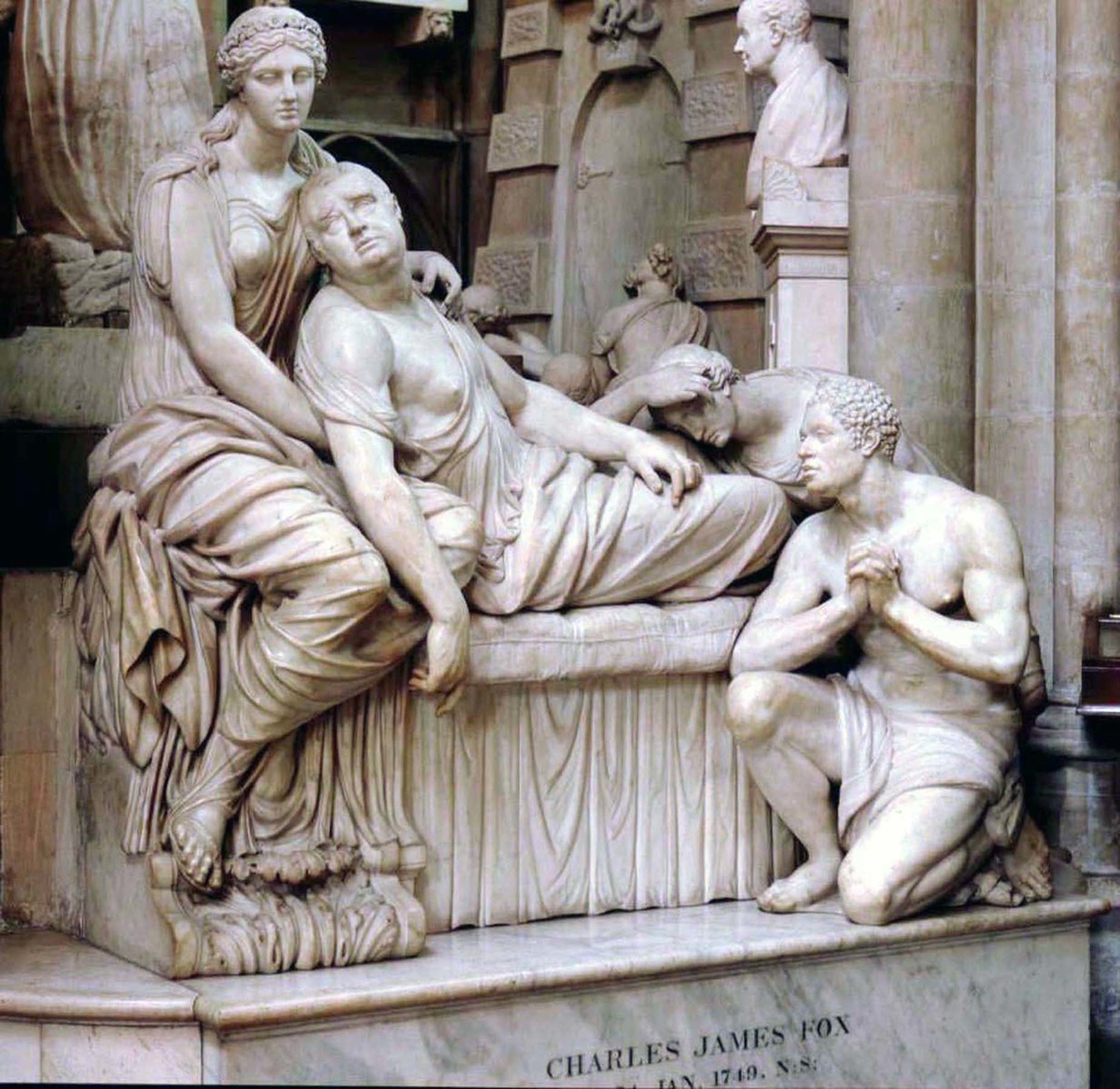
        Westminster Abbey, England, which has a statue of Martin Luther King at its entrance has, in the Statesmen’s Corner, a black carving as a part of weeping figures surrounding the statue of Charles James Fox (1749-1806). Brooke-Hunt (1902) says Fox “powerfully championed” the ‘negro’s’ cause. The monument (Figure 1)

Monument to Charles James Fox in the nave of Westminster Abbey. By Sir Richard Westmacott. showing 'Negro'

Monument to Charles James Fox in the nave of Westminster Abbey. By Sir Richard Westmacott.

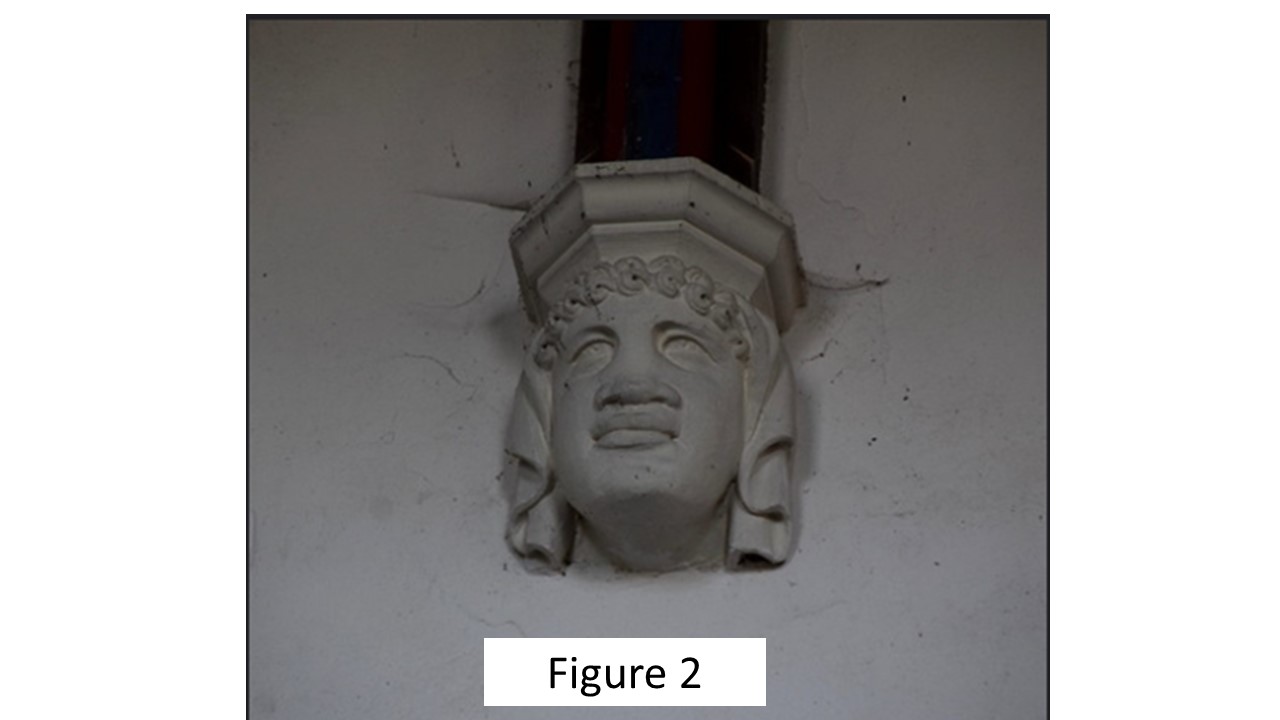
by the sculptor Sir Richard Westmacott, was installed in the Abbey in 1822. It shows “the dying Fox resting in the arms of a female figure representing Liberty. A slave (or perhaps a freed slave) kneels at the deathbed – the kneeling posture has been taken to represent both mourning and gratitude in reference to Fox’s support in Parliament for the cause of the abolition of slavery. The female figure behind the kneeling man (partly draped over Fox) represents Peace.” (Tony Trowles 2020). At St Margaret, Thrandeston in Suffolk there are corbels of a “negress” (Figure 2) and a “Moor”.

         Black cultural images have also been used locally for a long time. At The Cathedral of St. Jago de la Vega in Spanish Town, corbels were placed on the building when the new Chancel was erected circa 1849-1853. Two of these corbels are black persons representing the newly emancipated ‘negro’. Thus, the Church has recognized the importance of other ethnic groups and the dignity of all persons.
         In Jamaica, traditionally, the churches which use icons (ikons) have been the Ethiopian Orthodox Church, Roman Catholics and Anglicans. Icons used are of Jesus, Mary, other religious figures, and Bible stories. They have been portrayed as black by several artists and it is understood that they are not to be white.
         In several Anglican Churches there are black icons or representations of Christian stories. Several Churches use black or culturally relevant images on their bulletins/newsletters. Most of these were commissioned in the 1970s, an era of heightened black awareness, pride and in the words of Prof. the Hon. Rex Nettleford, the ‘smaddytization’ of Jamaicans. These icons were all created by local artists.

Known Black Icons 
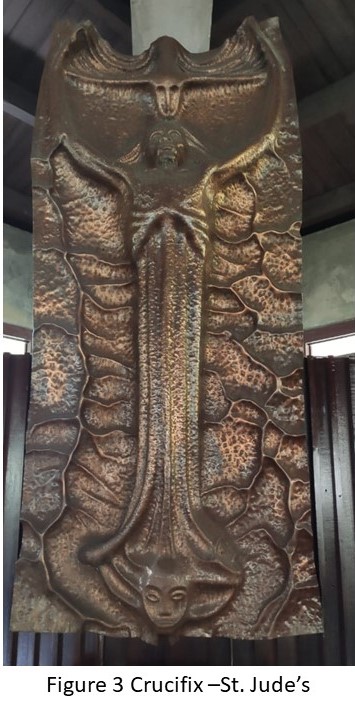
        The pieces of art mentioned here is not an exhaustive list of black icons in the Diocese. Some of these works were controversial at the time of erection. One such piece is the crucifix at St. Jude’s, Stony Hill, by Christopher Gonzales (Figure 3) below:

In 1973 Bishop Alfred Reid, then the Rector, commissioned a crucifix for the new Church. It is customary in an Anglican Church to have a cross behind the Altar. This one is more of a resurrection scene. The bird at the top represents the Holy Spirit, commonly expressed as a dove. In this work it is represented as a figure looking more like a screech owl (Barn Owl). Even Jesus’ image is controversial.
         Rev. Khan Honeyghan, the current Rector, explains: “Jesus is coming out of the grave. He is triumphant and his hands go up in the air and it joins with the wings of the Holy Spirit. Jesus is a black man with broad nostrils, his hair and beard looking more like a Rastafarian. The ripple effect on the sides represent bolts of lightning as he emerges from the grave, representing the significant and powerful event of the Resurrection. There is a snake on the left. At the bottom are two heads. One immediately below Jesus and another on the right representing the people. Jesus is pulling out of Hades with him.” Persons objected to the imagery of the ‘Rastafarian’ Jesus and the dove looked ghostlike, they contend. St. Jude’s has several other black icons such as:

  • Black Jesus”, signature of artist illegible
  • Mary, Joseph and baby Jesus fleeing to Egypt  
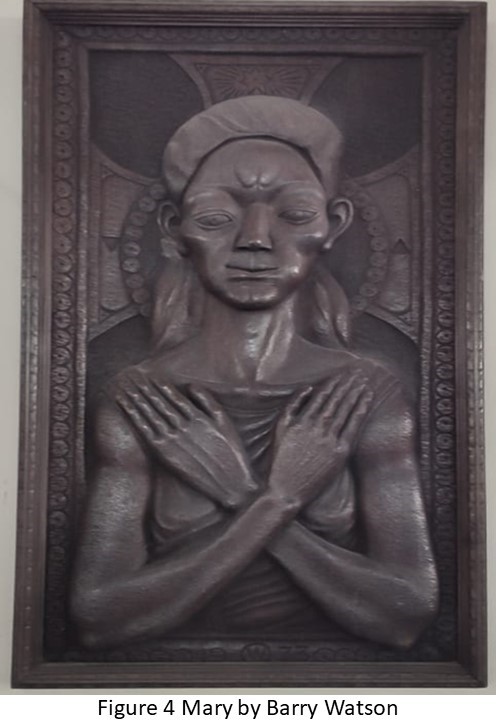
  • Black St. Jude – Barry Watson
  •  Mary – Barry Watson (Figure 4)

         At The Church of St. Thomas the Apostle, commonly called The Kingston Parish Church, there are 3 pieces:
•  ‘Piet’ by Susan Alexander – A triptych (Figure 5)
•  “The Angel”, by Edna Manley and
•  “Mother and Child” – Osmond Watson 
The ‘Piet’ depicts the women anointing the body of Jesus for burial, and the ‘Mother and Child’ are currently located in the Lady Chapel.

        The Church of St. Mary the Virgin, which was pastored for forty years by Liberation Theologian Canon Ernle Gordon boasts two Marianne figures, and a depiction of the Resurrection by Barry Watson.
        Karl Parboosingh’s last artistic work is a mural behind the Altar at the Church of the Resurrection in Duhaney Park, Kingston. For some time, this was covered as members of the church community objected to it.
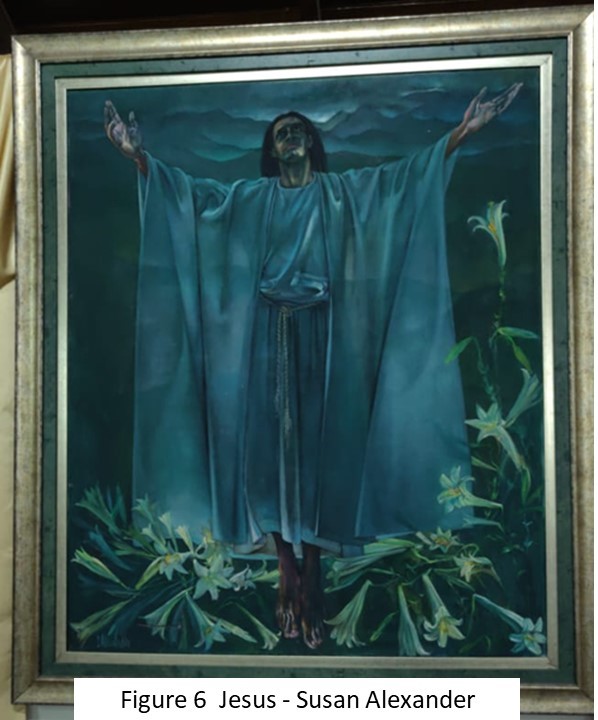
         In At All Saints’ Church, West Street is a sculpture “The Crucifix” by Edna Manley which hangs over the Altar.  In 1976, Neville Alexander gifted the newly built Church of the Holy Spirit, Cumberland, Portmore with a painting “Jesus” which stands behind the altar. (Figure 6) Painted by his wife Susan Alexander, Neville presented it on behalf of his faithful employee, Enid Brown.

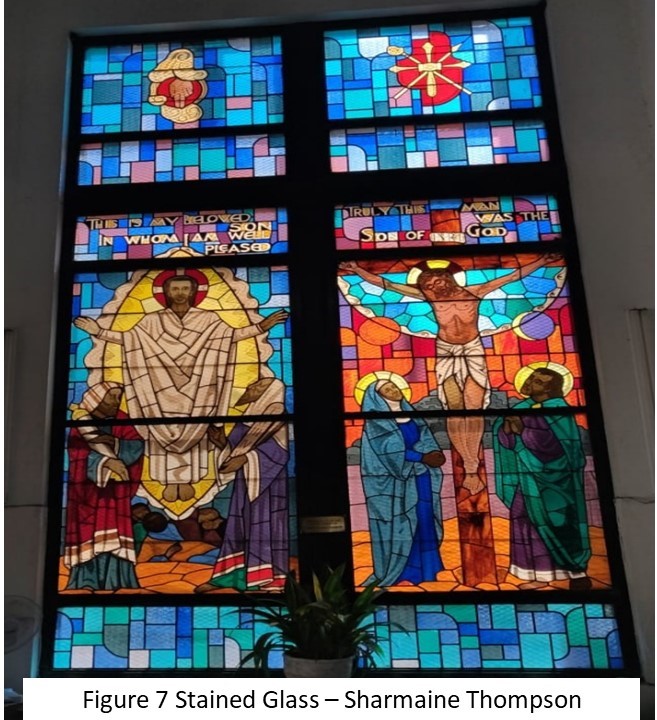
        The Church of the Transfiguration in Meadowbrook, boasts a stained glass window with black figures in it. (Figure 7) This was done by Mrs. Charmaine Thompson, the wife of Bishop Robert Thompson.

Other known images are:
• ‘Christ Ascending’ – St Andrew Parish Church in the All Souls’ Chapel
• The Chapel of Intercession – at the United Theological College of the West Indies, is a painting by Edna Manley
• ‘The Real Last Supper’ at Hillcrest Diocesan Retreat Centre.
• A statue at the entrance in the Chapel at The University of the West Indies, Mona

        It is important to note that it is not only in the Anglican Church that bible stories or biblical persons have been depicted as black. The Holy Trinity Roman Catholic Cathedral has black saints in its stained-glass windows. Mallica “Kapo” Reynolds of the Revival Church is well known for his depictions of biblical stories using black people. The Rastafarians have always depicted Jesus as black.

Reasons for not recognizing Jesus as black
         A lot of work has been done depicting Jesus and biblical characters as black, but we have chosen not to pay attention. The reasons may be many. Among them are:

        • We have failed to understand that theology is contextual. Each person and each culture experiences God differently and we have allowed others to teach us or to suggest how God should be experienced. As a people we bought into a “correct” way of worshipping God and a “correct” way of practicing faith. That right way dictates a white God. We have failed to assert or even acknowledge our African heritage which is one of the main reasons for our failure to appreciate that Jesus can be black like us and that God has no colour or gender except those we give to God in an effort to better help us understand God’s action in the world.
        • It may be that we have been brainwashed or indoctrinated in white supremacy and privilege. Many of us are still in a place where the higher one’s skin tone is perceived to be, the better you are as a person and so should enjoy better opportunities. There is a story of a European artist painting The Last Supper and using a young handsome man as Jesus. Several years later he wanted to depict Judas. He went into the prison and found a man whom he thought represented Judas. In time he realized that his Jesus had run afoul of the law and he had chosen him to be Judas.
        • Many of us have been cultured to believe that anything black cannot be good and is therefore unacceptable. In the 1930s, the congregation at All Saints Church, West Street in Kingston rejected Canon Walter Brown, its first black rector. The Bishop told them he would not be assigning another priest, so they were forced to accept him.  In 1783, George Leile (also spelt Lisle), a former enslaved African American, came to Jamaica and established what we know today as the Jamaica Baptist Union. The East Queen Street Baptist Church was dedicated 1822 to yet its first black pastor, Rev Leo Rhynie, who was only appointed in 1958.
        •  Perhaps, for us in Jamaica since we were taught Christianity by white persons who had indigenized Christ in their culture beginning with Leonardo DaVinci’s “Last Supper”. This made Jesus reflect their white self. We then acquired their thinking of Christ without developing our own. White Jesus is everywhere, on Christmas cards, on easily accessible imported photographs, the pictures which hang in our grandma’s home, and the free calendars given as gifts every December. Some of us have never really given thought to the colour of Jesus. Few of us would ever question these depictions. Others have refused to think differently particularly since our theological focus has been on our sins and our unworthiness. As we struggle to keep ourselves from hell, we think of nothing else.
      Conclusion        
    •         We learn our values vicariously from what happens around us, pictures, movies, our friend’s worldview, and the same happens in religious circle. How we view Jesus matters, as this determines how we view persons who are different from us. Every tribe and nation can make Jesus their own as each was made in the likeness of God.  Further, the incarnated Jesus reflects each of us as we are with our idiosyncrasies. When we acknowledge this, then each person, people, race, and community can be proud of who they are. We can then be comfortable in our own skin, and also give to each other the respect and dignity each deserves.

REFERENCES:
Brooke-Hunt, Violet. (1902), The Story of Westminster Abbey, London. James Nisbet & Co. Ltd.
Please note that this article was prepared with the generous assistance of:
• Mr. Tony Trowles, Westminster Abbey, London, England;
• Reverends. Khan Honeyghan and Leslie Mowatt
• Dr. Trevor Hope, Mr. Bill Poinsett, Mrs. Margaret Mais,

Amateur photography was contributed by these persons: Rev. Khan Honeyghan, Mr. Bertram Gayle, Dudley McLean, and Herschel Ismail.


    Posted in Religion | Tagged , , , , | Leave a comment

    A Father’s Day Message

    Happy Father’s Day  to all the persons who have raised children. I do hope you all have a great day and feel thankful for the contributions you have made to the next generation.

    Genesis 21:8-21 tells the story of Abraham and Hagar with two examples of fatherhood.
    Firstly we see Abraham, who chooses between his sons. If we look at what we know about Abraham we recognize that he does what he understands to be in his best interest. When he went to Egypt and the Pharaoh wanted to have relations with his wife Sarah, Abraham did not stand up for her because he may have been killed. One might say she was property but the other man did not see her as such.

    In Genesis 18:1-15, we see Abraham running to greet three men and inviting them into his tent before any other person could offer the same hospitality. Hospitality was a big thing. These early tribes lived in groups so it was unlikely that Abraham would have been the only head of household. Traders and other nomads would often come in contact with semi-nomads like Abraham from time to time. Semi-nomads because they did not always stay in one place. They moved as there was land to graze the animals and grow grain. These persons often left parting gifts for the hospitality or extended a blessing. And they sure did, they blessed Abraham with a son. but Sarah laughed.

    Abraham’s need for an heir was so strong, he spoke to God about it. He desperately wanted to leave his inheritance to an offspring, but he had none. Sarah too wanted to take shame of barrenness out of her own eye. Sarah and Abraham decided that the Egyptian slave girl Hagar would be the surrogate. She had the child. While she was pregnant, she ran away because they treated her badly. God convinced her to go back. She had the child and for a while everybody was happy. Sarah then became pregnant sometime after. Sarah was not having Ishmael share in Abraham’s wealth. She saw both children playing one day, the older laughing and teasing the younger as children often do, particularly when one is a little older than the other. Ishmael, was sixteen (16) and Isaac about three (3) as that was the time of weaning according to their custom. Sarah was having none of it. Neither the rough playing nor was Ishmael going to inherit what was rightfully hers. The word and tense used could also mean that Ishmael was always mocking Isaac, allowing Ishmael’s actions to be interpreted as abusive, but it was not so. She forced Abraham to send them away. Verse 9-10 tells us ‘when Sarah saw the son, Hagar (the Egyptian girl) bore for Abraham laughing and teasing her son. She became jealous and demanded of Abraham: Throw this slave woman and her son out right now! The son of this slave is not going to share the inheritance along with my son, Isaac, if I have anything to do with it!’

    In Chapter 15:19 God tells Abraham that the covenant and promise of nations comes through Sarah’s son Isaac and not Ishmael. Sarah does not seem to know this and so she thinks Ishmael threatens what is due to Isaac. All children were inheritors once they were recognized by the father. Further if a slave bore children she was not to be sold or expelled.
    For a peaceful life Abraham sends them away. God tells him not to worry because He would take care of Hagar and Ishmael. What grabs me though is that Abraham sends them away with literally nothing. Where they lived was not like the Jamaican countryside where there were fruit trees growing wild or untended, no banana to cut off a hand. Abraham sent away his son with only a loaf of bread and a container of water into a deserted place. Some translations say a skin of water – a pouch made from animal skin, or maybe a bladder. They left with very little to sustain them. It may have been enough to get her to the next water hole or set of tents but certainly not enough to get her to her homeland Egypt. Ishmael was left to the mercy and kindness of others.

    Does Abraham’s personality look or sound familiar to you?

    How many times do we know of men having children, only to abandon them when their wife finds out?

    How many times have you heard of a current woman preventing a man from looking after the children he had before she and her children came along?

    How many times have we heard of men giving their children less than what they need to survive?

    Let me say this. Its not only men who treat their children badly, women do it too.

    While we bear these things in mind we will not dwell on them, because there is another father in the story. One we know very well. God! God is the Father of all fathers. The story of Abraham and Hagar points to the caring character of God. God was with both families. God kept his promise to Abraham while at the same time, God never left Hagar and Ishmael. Ishmael grew into a well-adjusted adult. We are told He and Isaac buried their father together.

    When we talk about God being father, we aren’t talking about him in the earthly sense of Fatherhood. God is father because he created the world and we with him are co-creators. It therefore means that we should be looking to take on the character of God. The person-hood of someone who cares despite the situation. When Abraham and Sarah took things into their own hands, God did not abandon them, but in time, what God had promised came to be. God found a way to bring into fruition what God wanted.

    Even while Hagar was considered property by Abraham, to be used as he felt, and thrown away when she no longer had use, God did not abandon her. Can you imagine what would have happened if soon after Ishmael was born Sarah became pregnant? Hagar would have been sent away with a young child who would not have been easy to care for?

    On this Father’s day what characteristic do we need to hone for better family life and community. From our story I would say Compassion and commitment. With all of Abraham’s missteps God had compassion on him. We too should strive to be people who have compassion. Many times persons find themselves in situations and cant even figure out how they reached there. There is a young man who lives somewhere in Manchester. He came one evening for help to make a decision, – To go to town or stay in Manchester. He had a job in Kingston, lost it and has been spiraling downhill ever since. His question was not why me. But ‘how did I reach here?’ He has no mother, no father but an aunt who allows him to live rent free. His parents abandoned him a long ago. He says nobody speaks to him. And when he tries to engage other people he wonders if they think he is mad, because of their response. God accepts people as they are. God does not judge, God does not decide who they are or what they will do based on what they have done before. God has compassion.

    Compassion according to the dictionary means having a sympathetic consciousness of others’ distress together with a desire to alleviate it. That’s God. That’s what Fathers do. They make sure their children are alright. That they are in a good place. Sometimes we don’t like their methods, but they usually are acting in our best interest. God always acts in our best interest. He shows us opportunities to live our best lives just as he showed Hagar the watering hole. Poor soul dehydrated and hungry, she couldn’t see straight. She though she was going to die, but God kept her. He didn’t let go. He doesn’t let us go either.

    We very often focus on what is happening in the world outside our families our households. But fathers day is about family. Its about acknowledging our parents particularly our father. With 45% of our households being female headed, we have one parent acting in both roles. Being a father does not have anything to do with reproductive organs or the gonads God gave us when we were born. It has to do with being an individual that nurtures in a way that compliments Mother. A father is usually the disciplinarian. A common phrase in Jamaica was ‘wait till yu father come’

    Yes the task of living as a youngster in a father-child relationship is sometimes painful. We don’t always react as expected. For some, our father annoy us with their strong sense of self and how they want us to be. We resent it. Oh yes! We cry for hours, thinking bad things and being sorry at the same time. We feel hate this minute sometimes even to the point where we think we would be better off if they were dead or absent from your life. But there is love lurking at the back of our minds. We don’t quite get it, that Dad wants the best for us. He wants us to have what he didn’t, particularly if he is able to afford more than his parents. Hopefully in time we will all get to that understanding.

    Then there is Dad who doesn’t understand that we have to be our own person and literally crushes us. He wants us to be all that he wasn’t. we have a difficult time conforming. Its painful.

    Some constantly long for their father to talk to and with them; and not at them, to do things with them. Sometimes these fathers live in the same home, but they don’t understand the role they should be playing. Many believe that by providing physical things is enough. There is little or no emotional support or spiritual guidance. There is no, what we call, quality time spent with the children. We miss out on a bond that we later wish we had.

    But life doesn’t have to be that way.

    A father is usually the one who while protecting, allows you to explore and find yourself. Dad is usually not as fearful of the world as Mom. It is said that ‘the presence of a loving father greatly increases a child’s chances of success, confidence and resilience’. This confident successful resilient person is who we are all sent into the world to be. But we cant be that person if we do not open ourselves to understanding what is happening. If we always choose to have our own way like Abraham. God told Abraham he would father nations through Sarah, but he was willing to give her away to another man, and to have a child by another woman.

    God shows us the way. God sent Jesus to show us the way. We have all the prophets, the disciples, the early Christian communities, the early church fathers, even our own parents, who have shown us how to father others. The church has always used a method of discipleship of showing compassion as Jesus did.

    We, God’s children have a responsibility to our family and community to nurture others as God nurtures, filling in the gaps that will make for wholesome well adjusted individuals. We must have a father’s compassion for all. It is the Jesus way. I do hope we can all find it in our heart to be compassionate and father-like, Godlike in our behaviour to others. (June 21, 2020) #proper7YearA

    Posted in Religion | Leave a comment

    A Maundy Thursday Reflection – The Eucharist – what does this mean to you

    On a night such as this one, Jesus said ‘do this in remembrance of me.’
    All three readings tonight speak to a ritual which either informs our present practice or is our present practice. In our first reading (Exodus 12:1-4, 11-14) we see The Jews being commanded to keep repeating the story of the Passover which today thousands of years later they repeat with their children every Friday night at the Seder meal. In the second reading, (1 Corinthians 11:23-26) it is what we the followers of Christ continue to do today, 2000 years after his death. It is what has been handed down from the first disciples through the early Church, where we recall the crucifixion and resurrection of Jesus, as we like them, break bread. In our gospel reading (John 13:1-17, 31b-35) we have the washing of feet which is only recorded in the gospel of John, Do this in remembrance of me, was not repeated here, but this very embarrassing, uncomfortable and humbling practice that has changed a lot through the ages has remained with us as a Maundy Thursday practice. It seems many things happened on that night before the crucifixion, as it is also the time when it is recorded that Jesus commanded his disciples to love one another as he loved them. That is where Maundy Thursday got its name. – Maundy comes from Mandatum – the latin for commandment. In many churches they have a love feast that accompanies the washing of feet, our love feast, however is sharing in the cup of wine.
    Our reading of 1 Corinthians rests with me. I very often feel that we participate in the Eucharist but it has somehow lost its deeper meaning to us. We do not come with passion nor do we leave with a passion to be and to do. So, tonight as we commemorate that first Eucharist I ask, What does it mean to us? Yes we assemble in the name of God and in fellowship with one another – united as one, to eat and drink in the Holy sacrament. What happens or is supposed to happen? How do we feel? Does it make any real difference to us?
    Elisabeth 1 when pressed to say whether or not she believed the bread and wine to be the actual body and blood of Christ, she said the following words.
    “Christ was the word that spake it. He took the bread and brake it; And what his words did make it That I believe and take it”. For most of us we don’t question the significance of the ritual, we just participate. Some believe that it feeds our spiritual souls as food feeds our physical bodies. I challenge you to consider well what you think and why as you eat the flesh of Jesus and drink his blood. How you understand it makes a difference in, if, and how it transforms you, and if, and how you express Christ to others.
    It is important that we have a clear understanding of who is in attendance at the Eucharist. We must understand that Jesus is present at every Eucharist. He is the presider. The priest acts as the head of the body Christ, and he represents him. He, the priest that is, brings the bread the wine, our lives and joins them to the sacrifice of Jesus, offering them to the Father. Thus as Christ is presented to us in the body and blood, – our spiritual nourishment, he is also present as the person presiding at the mass.
    This spiritual nourishment is not to be taken as if one is entitled to it, but as the opening prayer says we confessing our sins are made worthy of offering our souls and bodies as living sacrifices. We see here that we come to the table with a contrite heart. In the Eucharist before we taste of the banquet, 5 times do we acknowledge together our contriteness: in the opening prayer, the prayer of purity, the kyries, the general confession and in the Agnus Dei – that is the ‘O lamb of God’. It’s a contriteness understood that we are all equal, not as a donkey views the world, but as members of the family of God – none greater than the other. Some may have more resources, but we are all one in the sight of God – one human race. Each deserving of the same dignity as the next person. Galatians 3: 27 and 28 read from the VOICE says, “because all of you who have been initiated into the Anointed One through the ceremonial washing of baptism have put Him on. It makes no difference whether you are a Jew or a Greek, a slave or a freeman, a man or a woman, because in Jesus the Anointed, the Liberating King, you are all one.”
    I’ll go further to stress that our oneness, is a foundational truth of our faith, which if we fail to embrace we cannot truly practice ‘Christness’ Christianity and Christlikeness. In the beginning God made us in his image and gave us God’s life. God never gave some and not others. Thus it means that we are all children of God, all equal in God’s sight, deserving of the same dignity and ‘equalness’. Some have just not acknowledged it. It’s our job as Christlike people to bring them into fellowship with the creator.
    On the night Jesus broke bread and gave each disciple a piece. In our Eucharistic prayer this is celebrated in the fraction, that is when the priest breaks the bread and says “we break this bread to share in the body of Christ”. This is a goose pimple moment. I look in awe every Sunday as those words or the equivalent are said and the meaning washes over me. I understand it as ‘the body of Christ broken for the body of Christ’. The first body is the person Christ who in giving of himself was broken for us. The second body is the one family of God united in Christ. For me it also represents our brokenness which is being made whole through the body and blood of Christ. It represents the brokenness of the world which we go to love and serve in the name of Christ.
    On the night Jesus took the cup of wine and gave each of them a sip from the same cup. We have no record that they dipped the bread in the wine. They did not scorn each other, they did not consider whether or not they would catch a germ or give their germs to others. They drank trusting God that they were all brethren and family. I wish we would all let the 18% alcohol cleanse us with the fire we feel when it goes down our throats. Drinking from the one cup brings also a humility, which our gospel reading introduces us to. The kind of humility that caused Jesus to wash the feet of the disciples.
    You know washing of feet we are told were for the lowliest slave. Have you ever thought about how filthy their feet were. Their roads were not paved, animals were there only form of transport and there would be droppings as the animals went from one place to another. When dry and powdery they walked in it, when rain fell it spattered all over even they were able to avoid walking in it. To wash those sandaled feet was yucky! But Jesus did not ‘skin up’ his face, scorn or turn up his nose. He did the job showing us that we too are called as his servants to forget about ourselves and get down and dirty for his sake.

    I shared the following with my students at CTC about 3 weeks ago and I think it becomes relevant today because humility is not a word we use very often these days. Humility for a long time has been a bad word to me. Humility, is very often used in relation to persons wanting others to play dead and roll over, or to be subject to them. One dictionary said ‘humility is the quality of having a modest or low view of one’s importance’. And to top that ‘it gave poor self-esteem as a synonym’. But that is not true. That’s not God’s message to us. That is not who we are in Christ. Humility is not sucking up to anybody or being a door mat. Humility is a quality that Jesus highly admires, one he himself exhibited. He emptied himself. Though he was God he never sought equality with God while on earth. He never thought himself too high to give his life so that humankind could be better. He washed the stinky feet of his disciples.
    Humility is about being your authentic true self in Jesus Christ. It is being unpretentious and comfortable with who you are in Christ and seeking to build others up, and not yourself. It is recognizing in the misfortunes of others – there go I but for the grace of God. It is being grateful of one’s ability to walk in God’s grace, love, and forgiveness. It’s what the Eucharist should do for us as well.
    When you participate in the Holy Communion and the service how do you feel? Do you leave Church as you came? What does this do for you? Do you come to Church thinking that you are going to leave refreshed? Do you become absorbed in the singing, the readings and prayers? Do we look on it as communing with God along with our brothers and sisters? Do we ever consider that we are worshipping God with Jesus sitting at the table with us? Do we consider that we have been cleansed, forgiven, imperfect yet holy and set apart for the work God has assigned us to do? Do we feel at one with the divine and so are able to do as the Priest says, to go in peace and serve the Lord? Are we thanking God for his continued grace and mercy and committing to continue in righteousness, that is, right living? Is it a weekly renewal of our covenant with Christ, a covenant which was made at our baptism, where we promise to carry on God’s work to love as he loved us, to serve all people and to live in faith until his coming again?
    The hymn ‘Here O my Lord I see thee face to face’ helps us understand with these verses, the gist of which are:
    This is the hour of banquet and of song;
    The heavenly table spread;
    We feast, and in feasting, prolong
    The hallowed hour of fellowship with Jesus and God.

    Ours is the sin, but the righteousness is God:
    Ours is the guilt, but the cleansing blood is Jesus;
    Our robe, our refuge, and our peace;
    Jesus Blood, and righteousness.

    When we rise; the symbols disappear;
    The feast, but not the love, is past and gone.
    The bread and wine removed;
    but Jesus is still here, we have a foretaste of the festal joy.

    This love and Joy, this sweet foretaste cannot be truly felt if we come to the table like the Pharisee in our self-righteousness; with an attitude that does not acknowledge that we are not worthy to be at the table, but are only there because we are redeemed by Jesus. We must come as the publican! As the confession says ‘being sorry for things done and left undone’. Things not done as they should have been done in the first place, like those times when we get defensive. We should come to the table humbly and available to God to be transformed. We should come and put aside everything else, to revel in the Lord. We should forget about ourselves and concentrate on God, so God is able to reveal Godself to us. Then and only then are we able to go home week after week, living a better life. A life passionate about practicing intentional and deliberate discipleship. Our assurance of pardon makes us joyful, our feast makes us whole and at peace with ourselves and the world.

    Participating in the Holy Communion we see does 4 things for us as we are transformed:

    1. it unites with all other Christians and provides us with a pledge of glory to come;
    2. it provides us with spiritual food;
    3. it separate us from our sins;
    4. last but not least we commit to serving others with dignity through love mercy and peace.

    Thus participating in the Holy communion brings to mind and reflection, what Jesus said on the first Maundy Thursday. Do this in remembrance of me.

    Let us pray,
    Lord of the Mass, you who broke bread and shared one cup with your brethren. As we prepare to participate in your crucifixion and resurrection and to be renewed in your love at your table, help us to understand every day a little more about you, what your word, our traditions and rituals mean. Keep reminding us that they are not ends in and of themselves but that they point us to you. They point to how we should seek to live in the world every day and become closer to you, a life where all is done as you would have done it and in remembrance of you. Amen.

    Posted in Religion | Tagged , , , | Comments Off on A Maundy Thursday Reflection – The Eucharist – what does this mean to you

    My National Prayer Breakfast Keynote Address

    This address is for a class called Advanced Seminar in Preaching. I hope you enjoy reading it as much as I enjoyed writing it, 
    According to Martin Luther King, “We have flown the air like birds and swum the sea like fishes, but we have yet to learn the simple act of walking the earth like brothers.” Garvey said one God, one aim, one destiny. These men were just expounding the same words of Micah chapter 6 Which says– show justice love kindness and walk humbly before God.
    Micah lived in a period of economic upheaval. Assyria, the then dominant world power, was still a menace to what was left of a divided Israel. Unfortunately, the economic prosperity had spawned a selfish materialism, as a means of achieving human desires and success along with a complacent approach to religion in the society. Micah also witnessed the disintegration of personal and social values in his society. Wealth was being invested, but at the same time there was the collapse of the traditional systems of employment and welfare. People suffered from this lack of economic stability and all around there was emotional distress. Age-old values were shrugged off, and social concern was at the bottom of the list of priorities of national and local government officials. The religious leaders did little more than echo the spirit of the time, reinforcing the society that gave them their livelihood. Micah a man from the countryside, had first-hand knowledge of the sufferings of the working folk of his society.

    He reveals to Israel that what is required is justice, mercy, love, and humility. I am sure you will agree that Jamaica can be substituted for Israel as our society is no different. Our social values are almost non-existent with our school girls learning to transact sex at an early age. Our women are unable to fend for their children. Children, choose to live on the streets, rather than in a home of misery. It seems no one, but the Don cares. It is the Don who takes on the role of father. He encourages the boys to go to school. He gives them bus fares, uniforms, schoolbooks and motivates them while training them to be his foot soldiers. Mother is happy because she does not have to sleep with her ‘baby father’ to put food on the table, nor does she have to find a man to help her supplement her wages which is not even enough if she did not have a family. This man will make her pregnant as he will refuse to wear a condom.

    The indiscipline in our society today is rife, you only need to see how we drive on the roads and look at the amount of money collected in a traffic ticket amnesty. Just try to purchase something in a wholesale downtown. It is not first come, first serve, but whoever can push their way to the front or call out the loudest to catch the eye of the attendant.
    The level of violence in our country has caused us to develop a numbness. in 1996, it was cause for concern at 49th World Health Assembly meeting, and has a devastating effect on our children. Professor Maureen Samms-Vaughan a behavioural specialist reports that eight out of ten children between the ages of 12 -14 experience some sort of violence everyday whether through violent parental discipline or corporal punishment in schools. Six in ten Jamaican students say they have been bullied at some point in their lives. Then there is sexual violence that leaves lasting emotional wounds. It steals the dignity, trust and self-esteem of young persons, twenty-four per cent of girls ages 10-15 say their first experience of sex was forced. We steal our children’s innocence when reports show that that forty-six per cent of our women had their first sexual intercourse before age 13

    Our high crime rate tells another story of social decay. This was not something that started overnight, as said before in 1996 it had received international attention. It is a sore that has been festering for a long time and every now and again the scab breaks and it oozes. I call it a negative resistance movement, which can only become positive if we address the cause of it. It is resistance because the persons involved have developed a methodology, however warped some of us may think it is, that has helped them learn to live with a dignity, a false sense of equality, born out of I am equal to, or better than you because I can con you, or, I am able to exert physical or emotional power over you. It is resistance, as the lifestyle is born out of a society that consistently fails to provide justice, mercy, and wholeness. The same kind of society Micah is speaking about. The silent motto is ‘wha you waan me fe do’. Nutten nah gwaan fe we, better yet you can’t talk to me, because I am hurting, and I only get relief from the things I take or the people I hurt. This is several generations old up until today, it has become like a generational curse because ‘Is suh the ting set’. We have generations who have never seen their near relatives, or their community members hold a steady job or earn a living any other way than hustling or juggling. Our society is no different from Micah’s.

    Three in every twenty Jamaicans live in poverty. Yes, our household poverty rate has decreased significantly but when you consider that every other person living in poverty is a child we need to think again about what is happening in our nation. We also have to consider that 1 in 10 children are not registered, 4 out of every 10 children lack basic access to health, nutrition, education and social welfare. UNICEF says our children are being excluded that is ‘we nuh count dem’. Children are considered excluded if we do not protect them from: violence, abuse, exploitation, or if they are unable to access and benefit from, high quality essential services, high quality information and high quality goods and I am not speaking about name brand goods. They are excluded if anything threatens their ability to participate fully in society NOW and in the future. it has been reported that 74% of our children between the ages of 12-14 had witnessed a violent act, stabbing being the most common through to shooting and rape and in 2017 murder of children went up by 36% above the number in 2016. Things seem to be getting worse not better. Children are murdered, sexually abused and their physical and emotional development is undermined. A child without multiple CXC passes faces severe challenges in accessing higher education or meaningful employment. More than 50 years as a nation and our education system continues to turn out persons who are barely functional in literacy and numeracy and so graduates are ill equipped to contribute positively to their own welfare and to society. one out of 5 babies is born to a teenage mother. While the effort made in teenage pregnancy must be acknowledged, a child giving birth to another child, means double exclusion – 2 children at risk.

    We have the wealthy and the owners of capital doling out to ease their conscience while they pay big bucks to security firms to guard they homes. Some live as prisoners as they are unable to move freely out of fear. We throw our hands in the air as we seem unprepared to solve the nations problem. We laughed when God revealed to a Minister of Government that he needed to turn to God to find a solution. We have allowed the imperial system of the world to numb our creativity. We have grown blind to the possibilities, because for too long we have placed band-aids on our problems. We have pandered to world powers and multinationals, we have not been bold, nor have we chosen to stand on God’s covenant to make us a great nation. We have failed to provide social and physical amenities and proper social programmes which benefit the majority of persons which is the right of all human beings. We have not treated people with the respect and dignity they deserve. We rationalize it. We don’t have enough money.

    I have spent a long time describing the situation in Jamaica land we love as we like to say, in order for us to truly appreciate the gravity of our situation and to help us pave a practical way forward. We have come to pray and in prayer we don’t only talk to God, we also have to be attentive to God as God gives us solutions and we have to be intentional in carrying these solutions making a new beginning is possible.

    Micah tells us, as he told Israel, it does not have to be this way. In our passage God has a conversation with Israel. In verse 3 God asks what have I done? why are you behaving in this way? In Verses 4 and 5, God recounts the things God has done for Israel though Moses and Aaron. God took them out of Egypt with a covenant promise to make them a great nation, but they reneged on their part. They did not follow through. The implications are that a new beginning is still possible. The way forward for Israel lies in the good men and women. Moses. Aaron and Miriam showed them the way. As the Israelites try to make sense of what is required. Verse 8 helps them. It says God has already made it plain how to live. what God is looking for in men and women is simple: We are required to do what is fair and just to your neighbour, be compassionate and loyal in your love, and to take God seriously. God requires of us the same thing today: to make a new beginning, using methods we have used in the past, God requires of us to live justly, mercifully and humbly.
    From Micah 6, we learn that we too have a new beginning, That God has provided for us good examples to show the way. All is required of us now is for us to be humble, Just, and merciful that is be loyal and love. Mark 12: 31 helps us understand that. Jesus tells us to love our neighbour just as like we love ourselves. In this new beginning that our ancestors have pointed us to, that God has given us, we are going to act from a position of love through which everyone will experience justice mercy and the humility of others. If we love each other as we love ourselves, it means we will all follow the golden rule, do unto others as we would want them to do to us. We all want good things for ourselves and our families.

    Jamaica received a new beginning from God at Independence, God gave us our sovereignty, the ability to govern ourselves, politically, socially and economically as in the best interest of all the many people who make one Jamaica. It was our covenant with God to be a great nation. But we like Israel have squandered it. We think that enforcing laws and going through the powerbroking motions of parliament or running a nation like our colonial masters did, or the multinational corporations suggest is good enough. We have failed to build credible institutions. Instead, those who can feast on their power status, creating a system of oppression rather than a system of justice and mercy. God tells us like he did Israel that this should not be so. Our forgiving and merciful God says a new beginning is still possible. But how?

    There were key periods in the life of Israel when things were good, when they were led by Moses and Aaron. We too have not just key times but key people who have shown us the way to live a good life, a life of worth and mercy. The maroons and the Rastas living according to the norms of their communities are good examples of living Justly merciful and humbly with each other.

    When slavery was abolished, the new free villages lived in harmony with each other. Jamaican communities once cared for their children. No child was allowed to err even if parents were not on speaking terms. Neighbours made sure that other neighbours ate. Each village had somebody or bodies who would pacify the wrongs and set the community straight.

    Each child was given dignity when the bastard law was annulled. Each mother given time to bond with her new baby before going back to work. Olive Lewin traversed Jamaica so we would know our culture and Louise Bennett taught us to be proud of our language. HEART Trust helped those who couldn’t make it academically by giving a skill. Marcus Garvey showed us that we can build industries, if we put our mind to it.
    Jamaica of old understood that right relations was the key to existence, that Humility Justice and Mercy were virtues to cultivate. While people had their various opinions, it was with a singleness of heart that they worked for a better community and a better Jamaica

    Old time Jamaica understood that Justice speaks to a situation where we each, not only have the same opportunities, but we each have the appropriate tools we need to access these opportunities. They understood that Justice doesn’t only mean being right, it also means being of worth, being respected and treated with dignity. Thus, one should act in a manner where others feel worthy, and that you are being loyal to your covenant relationship with God and your community brothers and sisters. This was riveted in the respect of good morning, good evening, and tenky which took nothing away from them.
    Justice says treat others as you would want to be treated. We should show kindness, feel compassion, have mercy for others always placing ourselves in their position and feeling as they do. We must not give ourselves more importance than we deserve. This, can only happen if we work together at the lowest unit of our society, the level of communities, households, and individuals. We exercise this mercy and justice by loving our neighbour.
    We can begin again to relate to each other without acrimony – hostility, rancour, animosity, bitterness and spite. We can embrace again the PALS programme in schools and revisit our ‘Values and Attitudes’. We can remember how we felt as children. We can allow our children to have the wonderful fun experiences of childhood while learning the work ethics and values they require to maintain themselves as an adult. We know how. We did it before. We can do it again. Jamaica is paradise, once described as a happy place. We can be happy again, and we will in our new beginning.

    This where the Church comes in. In every community there is at least one church. It is the church who best knows how to exemplify love. The Church gets to put into practice what it preaches. It therefore needs to lead the charge to advocate on behalf of others – to show Jamaica how to love. Our Jamaican prophet Bob Marley puts it nicely. He asks Is there a place for the hopeless sinner, who has hurt all mankind just to save his own beliefs? Is the situation reconcilable? yes it is! Bob says ‘let’s, get together in one love’. Bob Marley reminds us as does Micah and Mark that it is in our relationships that we can fix Jamaica. – One love.

    One love then becomes our new beginning. A beginning of communities living in harmony with each other, being considerate of the other person’s need. It becomes our means of justice, our means of humility. One love becomes care for our children and the other vulnerable persons in our community. One love means trust for our politicians and they in turn considering the social needs of everyone in their policies. Love here does not mean sex or the love between consenting adults. Love here is treating others as you would a baby, looking out for their best interest. Love means caring for another person, just because they are human like ourselves. Love means respecting ourselves and others. Love means not being selfish, giving as much as or more than you get. Love means that everyone gets according to their needs so that all can be their best self and contribute meaningfully to society. Love means walking in the shoes of another and feeling the stones through the soles. Loves means agreeing to disagree but still doing what is right and what is in the best interest of the community. Love means a singleness of heart.
    May we learn to fair and just to our neighbour, be compassionate and loyal in our love, not to take yourself too seriously but take God seriously as we make a new beginning using the template set for us. I wish for us One Love, One Heart, one Destiny in Jamaica land we love.

     

    Posted in Musings, Religion | Tagged , , | Leave a comment

    A Melancholic Christmas

    “Do not be afraid; for see—I am bringing you good news of great joy for all the people: to you is born this day in the city of David a Saviour, who is the Messiah.” Luke 2:10-11

    A friend posted how much she missed Christmas when her parents were alive. Her words were “At this time of year, l get sad and depressed. I remember our family getting together, the joy, the laughter the fun! On Christmas Eve at the 6:30 a.m. service Father Louis spoke about persons who found Christmas difficult because they missed loved ones. Christmas is also a difficult time for persons who see others apparently having fun and there is nothing fun in their lives. I am certain each of us can think of a difficult Christmas we have had.

    It is what the psychologists call melancholy. A bitter-sweet time I think is the best description. It is a time when we over-expect from life while at the same time, think too much about the inadequacies of this life – the way we would like our life to be, but it isn’t. Young children are sad that the excitement is over. Others dream of the things that they would want but are unable to have. Older children and adults feel sad because as they get older, traditions they love change, or they are no longer experienced in the same way.  It is a time many wish the world was more loving and had more compassion.

    I doubt that the first Christmas was any easier for Mary and Joseph. Caesar Augustus had decided to take census, to number everybody. It was the Roman National Identification System (NIDS) in action. If the book of Revelation was written then, they would consider it the ‘Mark of the Beast’. Put yourself in Mary’s shoes. You are pregnant and have to travel 100 miles, not in a car or bus but on a donkey or walking. The trip is estimated to take anywhere between 8-10 days. This must have been a scary and tough journey for a young, pregnant Mary. She must have been asking ‘Why me Lord’. Then to add to the anxiety, her water breaks on the way and they have no proper place to stay. She must ‘kotch’ (stay) in somebody’s out house. You men are probably saying, I cannot identify with Mary, but how helpless would you feel if your wife’s or girlfriend’s water broke in the middle of a trip and there was nowhere comfortable to stay. After all, Is you bring her on the trip, why didn’t you leave her with her parents for the few days?

    I don’t know how many of us can identify with not having a place to stay, but we can all certainly identify with being in difficult situations, situations that we would rather not face, situations when we were vulnerable like Mary and Joseph that first Christmas.

    The melancholy of Christmas points us to the joy of Christmas, but we must actively participate to experience it.

    Verses 10 – 14 of Luke 2, says in those difficult times, when we are uncertain, – Do not be afraid; for see—  I am bringing you good news of great joy for all the people: to you is born this day a Saviour, who is the Messiah, the Lord. Glory to God in the highest heaven… and on earth, peace among those whom God favours!”  We are assured that we are supposed to be happy at Christmas and all times because God has sent his son – A Saviour.  It is a great and joyful event that is meant for everybody in the whole wide world that will bring peace among those of goodwill.

    I would like us to focus on those four phrases fear not, Saviour, peace and goodwill. What do they mean for us on this day as we celebrate the birth of Christ.

    Fear not! Gabriel tells us that we do not have to second guess our participation in the Christmas story. Like the Shepherds we just need to leave our flocks – our baggage, our doubts, and come look for this Saviour. – our second word.

    A Saviour whom God has sent to deliver us from our sins. What are the sins we want to be delivered from?    It’s not only by not keeping God’s law that we sin. We sin when we refuse to be the best we can be. When we fail to live up to our full potential. Full potential here is not fantasizing about what we want and cannot get, or have no way of achieving; nor is it the things that lead to depression and feelings of insecurities. Full potential is those basic characteristics that make us human, that enhances our relationship one to another. Full potential are those things that provide us with inner peace.

    We are challenged to go through life living fearlessly and to participate in the Christ Story as the Shepherds where we will meet the Saviour. This Saviour will help us to achieve our full potential as human beings, to become better persons to ourselves and one to another, but we must participate. When we participate we not only become better people we find peace. – our third word

    Peace for many of us mean the absence of war or quarrel. That’s not the peace being offered by the Angels if we participate.  This peace is a quiet confidence that all will be well, a calm of one’s soul, of one’s personality. The peace that passes all understanding that St. Paul writes about. It is this peace that we all yearn for – It is difficult to describe but it is an inner calm that allows us to not be afraid. That allows to be our best selves – to live our full potential, despite our circumstances. It is an inner harmony, a wholeness, a completeness that we express by being in harmony with others and our environment even when we feel vulnerable.  This peace is open to all of us and all persons of goodwill. All manner of persons not just believers but the whole human race. All are blessed in Christ’s birth.

    The Christ story invites us to participate in this peace. It invites those of us who have participated and who have gotten complacent to be born again with the Christ child, that is become rejuvenated and remember the inner peace we once knew in this busy world. For those of us who have never known this peace, we are invited to open our hearts and our souls to experience this peace that passes all understanding which is available to all of goodwill our fourth word.

    Goodwill I once considered to be a characteristic like trust. One had to work hard to not not only earn it, but to keep it. However, Goodwill also means compassion. Com is a prefix meaning with. Thus we are challenged through the Christ story to live our lives with passion for Christ and to have compassion one for another.

    We have waited through advent for this time of celebration when the Christ child comes. – A great and joyful event, foretold centuries before in which we are invited to participate.  There is somebody -God’s son – Jesus, who can help us not just over the rough times  of Christmas or difficult situations, but through all times. But like the shepherds we must come and see, we must come and participate in this great and joyful event.

    Gabriel has brought us great news that today there is no need to be lonely, depressed, or sad; no need to be afraid. We can live our lives fearlessly, because God has sent his son Jesus, to save us, to free us so we can be our best selves. Jesus comes that we can live with passion and have compassion. Jesus comes that we can be whole and be truly happy. Only one thing is required. Like the shepherds on that first Christmas, we need to participate, not just today but every day in peace, with passion, compassion and without fear which will allow us to experience the true Joys of life. Christmas is the start of this life in which we are invited to participate.

    Come, try it! Will you?

    Posted in Musings, Religion | Tagged , , , | Leave a comment